Every small business has a limiting factor. It could be leads, cash flow, capacity, almost anything.
The Small Business Doctor diagnoses and develops a treatment plan for your bottleneck.
From business plan analysis to routine small business checkups to strategy sessions,
the Small Business Doctor provides the full-suite of strategic fractional CFO services.
Company size is a strategic decision. This decision, like all corporate strategy decision, is made by examining a company or nonprofit organization’s external environment.
Coase’s theory of the firm tells us that big companies are big because they have decided to take in-house tasks that could otherwise have been performed out in the marketplace. Company decision makers make this decision because they think these tasks can be performed at less cost by their own employees than by external vendors even though adding tasks and employees increases the company’s management load and there are diminishing returns to management.
In order for that strategic decision to make economic sense, the transaction costs in the marketplace must be higher than the extra management costs from adding these tasks and employees. If those transaction costs decrease, meaning that it now becomes less costly to pay for whatever product or service out in the market, then the company is strategically misaligned. The company, structured in this way with higher internal managerial costs than the market will bear, can no longer produce its own product or service at a competitive price. Unless it changes its own management structure, the company will eventually decline.
Business writers use the term downsize to refer to this change in a company’s management structure. Most often so-called “middle management” jobs are eliminated when this occurs. This is painful and costly both for the employees of course but also for the company itself.
That’s why it is in the best interest of a big company for those transaction costs inherent in market transactions to remain high. That enables the company’s expensive management costs to continue being justified.
The primary reason for transaction costs to be high is low social trust. Low social trust environments require more lawyers, inspectors, guards, auditors, insurance, and so forth. High social trust environments like Amish communities have very low to no need for any of those services and therefore have very low to nonexistent transaction costs. That is also why companies in these high social trust economic environments do not tend to employ many if any managers or human relations staff to provide these services internally.
High trust social networks favor many small companies along the supply chain. Low trust social networks favor a few big companies along the supply chain. Therefore, a big company is incentivized to do what it can to keep social trust in the marketplace low. Big companies and big organizations have an incentive to keep the social networks in which they operate at low levels of social trust.
Over the years, I have happily and confidentially advised a wide range of clients from a plumber near Pittsburgh to a robotics startup to a multi-state pediatrics practice. I am always your primary point of contact and hold myself accountable for your success.
The initial consultation is always free. My billing goal is to always provide clients with a high return on investment when working with me irrespective of their budget.
I am not a salesman. I will only take on a client when I can provide genuine value for them. Reach out if you need expert advice, assistance or have a question.
Hi there! I'm Matt. I'm a Christian, husband and father of four. I'm a graduate of Calvin, Harvard, Cardiff and Johns Hopkins Universities. I have a PhD in Economics, an MBA in Finance and an MS in Data Analytics. I'm a numbers guy who can communicate well!
I began this service to work directly with the small and mid-sized business owners who grow our great country's economy. Since 1999, I've worked with owners across industries from high tech IT and robotics to small farmers and artists. I've also helped and advised nonprofits from churches to civic organizations.
I also served as a Finance Staff Officer and eventually as the National Division Chief for Measurement Research within the US Coast Guard. The research and methods I created there continue to guide strategic decisions to this day.
I enjoy being active outdoors, especially in wild lands. Hiking, biking and fly fishing are some of my favorite pastimes.
I also love dogs! I'm an AKC obedience evaluator, and I train service and therapy dogs.
Companies need to keep some amount of inventory. When I go to a home repair supplier, I expect them to have the copper pipe I need in stock. When I go to my local bakery, I expect them to have the macarons I crave in stock. When I go to my local grocer, I expect […]
Our culture values specialization. Having specialized skills often leads to outsized material benefits. It also often results in praise and social status. Consider the social recognition that would be given to a medical doctor who is a primary care family medicine doctor compared to that given to an orthopedic surgeon. They are both highly educated, […]
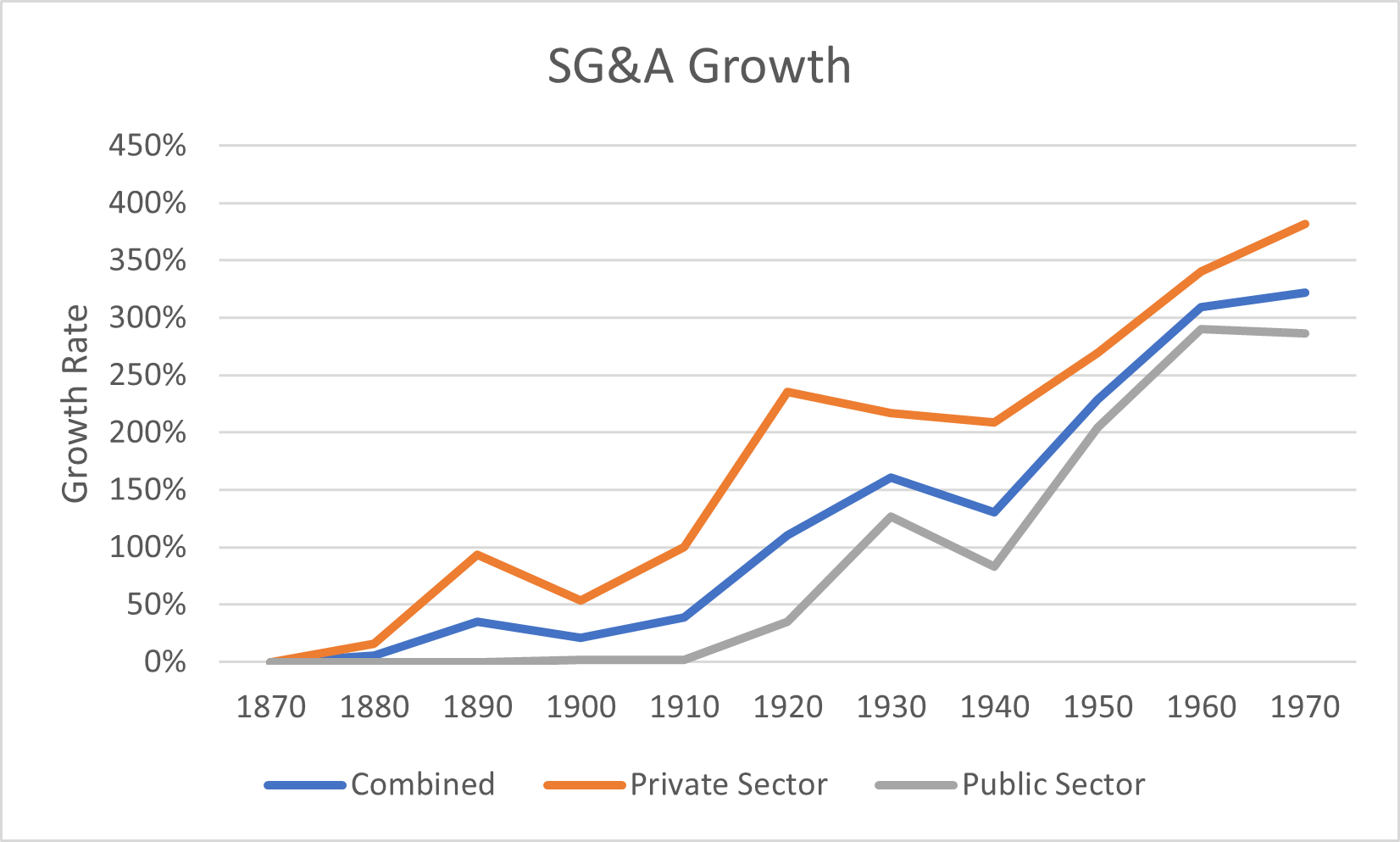
What Are Transaction Costs? Transaction costs are often overlooked in economics and textbook finance. In real life economics, however, they play a very significant role. In corporate finance, you can see many of a company’s transaction costs located in the selling and administrative categories within the Selling, General and Administrative (SG&A) section of their Income […]
During the Great Depression, British economist Ronald Coase wrote a famous essay on the nature of the firm or company. As with America at the time, many free-market economies were also enduring a severe and difficult economic depression. The Soviet Union, however, was growing to become a significant industrial economy. This led to a debate […]
Selling, General or Administrative Expenses One way to see how economic transaction costs are internalized within a company is in the SG&A Expense lines of a company’s income statement. All of the selling and administrative expenses are internalized transaction costs, and so is the insurance expense within the general expenses category. This is not the […]
Spams and scams have killed public polling. The person who would risk blowing up their phone or their bank account for the promise of a $20 gift card is not at all representative of the population at large.
Earnings per share (EPS) is a well-known financial metric that measures Net Income relative to the number of outstanding shares a company has. EPS is often used to compare one company to another. Basic Earnings Per Share EPS can be either basic or diluted. Basic EPS shows the portion of Net Income attributed to each […]







0 Comments
No comments yet. Be the first to comment