Every small business has a limiting factor. It could be leads, cash flow, capacity, almost anything.
The Small Business Doctor diagnoses and develops a treatment plan for your bottleneck.
From business plan analysis to routine small business checkups to strategy sessions,
the Small Business Doctor provides the full-suite of strategic fractional CFO services.
Public opinion polling has always suffered from some methodological problems, which is why economists have for decades preferred revealed preferences above stated preferences as more reliable data. Watch what they do, not what they say.
Aside from that issue, there is the perennial problem of ensuring that your sample accurately reflects your population. Random sampling is the usual solution to this problem. This problem, of course, is not unique to opinion polling, but opinion polling adds a wrinkle to this.
Not every person is equally willing to share their opinion with a stranger. Some people are eager to share their opinions with anyone who will listen. Others will only openly share their opinions with others they trust or with the caveat that the opinion not be made public. Still others need to have their opinions pried out of them with a lot of coaxing.
So, those who do respond to a polling firm’s request for their opinion are more likely to be within that group of people who are more willing to share their opinion with a stranger. That has always been true, and it has been dealt with by assuming that this difference in opinion sharing is not a relevant difference that would meaningfully bias the sample away from representing the population.
Whether this assumption was ever valid, it is almost certainly not valid now. Why? Because these days, to get enough respondents for their poll, polling firms need to send random people a text with a request to fill out their opinion survey. Or, worse, they try to call that random person.
What does that sound like? Spam and robocalls, which are about as popular as cancer these days.
Unsolicited communications should always and almost always do go straight to the trash. We have learned that unsolicited communications are almost always some form of a scam, and it is never worthwhile to sift through it all to find something worth paying attention to. These days there are finally easy ways to screen out these annoying and potentially dangerous unsolicited communications.
That’s why polling firms now need to pay people a lot more than they used to for stating their opinion. Yesterday, I was promised $20 by Mercury Opinion for sharing my opinion with them. By the way, I looked and Mercury Opinion appears to have a solid reputation as a polling firm, and I am not calling them out. In any case, $20 is a lot more than I would have guessed for what it would take to induce someone to share their opinion until it dawned on me that the rise of the attention economy and the ubiquity of harms that can befall your phone and your wallet from clicking on a shady link or taking that robocall mean that almost everyone heeds the sound advice to block and delete that stuff.
Almost everyone. Who clicks on a weird shortened link in a text message sent from some unknown number with a promise to pay you with a gift card for giving your opinion? Who gives some unknown Nigerian prince their bank account details?
I can think of three types of people who would, unlike myself, affirmatively respond to the spam text from Mercury Opinion. First and probably foremost are financially precarious folks who are indeed willing to risk falling prey to a scam for the promise of $20. Second are lonely people or loudmouths who are only all too willing to potentially fall prey to a scam with the expectation that they will be listened to. Third are people who simply do not know any better than to answer any question or click on any link that is directed to them.
If I’m right, then these are essentially the only people left who are now sharing their opinions with the polling firms. That is not a representative sample of the population. Whether it is economic polling to gauge consumer sentiment or political polling to gauge voter preferences, the person who would risk blowing up their phone or their bank account for the promise of a $20 gift card is not at all representative of the population at large.
That is why, as the Kansas City Fed found in a 2025 study, polls about consumer sentiment are essentially useless for forecasting consumer spending. At one time, before the Internet, there was some value but no longer. Here’s the money quote:
Recent data suggest consumer sentiment has been declining for the past several months, signaling a potential slowdown in spending. However, most measures of actual spending, such as core retail sales and PCE, have remained relatively stable. This discrepancy raises the question of how useful consumer attitudes are in predicting actual spending.
Polls are widely publicized and yet are largely useless. I can’t foresee them becoming any better going forward. It’s not like spam, robocalls, and online scams are going away anytime soon. The majority is becoming more silent as the spams and the scams grow.
Over the years, I have happily and confidentially advised a wide range of clients from a plumber near Pittsburgh to a robotics startup to a multi-state pediatrics practice. I am always your primary point of contact and hold myself accountable for your success.
The initial consultation is always free. My billing goal is to always provide clients with a high return on investment when working with me irrespective of their budget.
I am not a salesman. I will only take on a client when I can provide genuine value for them. Reach out if you need expert advice, assistance or have a question.
Hi there! I'm Matt. I'm a Christian, husband and father of four. I'm a graduate of Calvin, Harvard, Cardiff and Johns Hopkins Universities. I have a PhD in Economics, an MBA in Finance and an MS in Data Analytics. I'm a numbers guy who can communicate well!
I began this service to work directly with the small and mid-sized business owners who grow our great country's economy. Since 1999, I've worked with owners across industries from high tech IT and robotics to small farmers and artists. I've also helped and advised nonprofits from churches to civic organizations.
I also served as a Finance Staff Officer and eventually as the National Division Chief for Measurement Research within the US Coast Guard. The research and methods I created there continue to guide strategic decisions to this day.
I enjoy being active outdoors, especially in wild lands. Hiking, biking and fly fishing are some of my favorite pastimes.
I also love dogs! I'm an AKC obedience evaluator, and I train service and therapy dogs.
Companies need to keep some amount of inventory. When I go to a home repair supplier, I expect them to have the copper pipe I need in stock. When I go to my local bakery, I expect them to have the macarons I crave in stock. When I go to my local grocer, I expect […]
Our culture values specialization. Having specialized skills often leads to outsized material benefits. It also often results in praise and social status. Consider the social recognition that would be given to a medical doctor who is a primary care family medicine doctor compared to that given to an orthopedic surgeon. They are both highly educated, […]
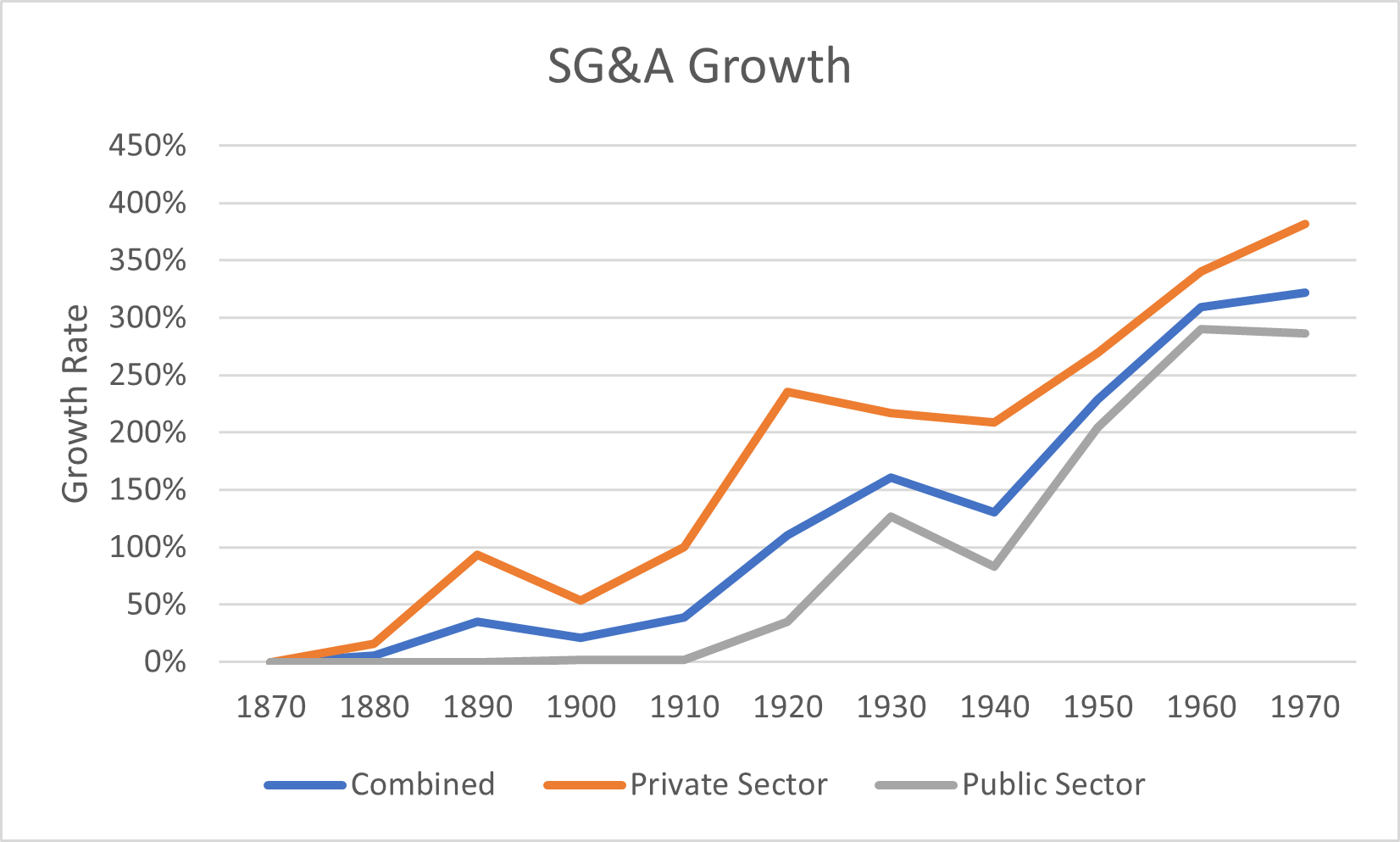
What Are Transaction Costs? Transaction costs are often overlooked in economics and textbook finance. In real life economics, however, they play a very significant role. In corporate finance, you can see many of a company’s transaction costs located in the selling and administrative categories within the Selling, General and Administrative (SG&A) section of their Income […]
During the Great Depression, British economist Ronald Coase wrote a famous essay on the nature of the firm or company. As with America at the time, many free-market economies were also enduring a severe and difficult economic depression. The Soviet Union, however, was growing to become a significant industrial economy. This led to a debate […]
Selling, General or Administrative Expenses One way to see how economic transaction costs are internalized within a company is in the SG&A Expense lines of a company’s income statement. All of the selling and administrative expenses are internalized transaction costs, and so is the insurance expense within the general expenses category. This is not the […]
Spams and scams have killed public polling. The person who would risk blowing up their phone or their bank account for the promise of a $20 gift card is not at all representative of the population at large.
Earnings per share (EPS) is a well-known financial metric that measures Net Income relative to the number of outstanding shares a company has. EPS is often used to compare one company to another. Basic Earnings Per Share EPS can be either basic or diluted. Basic EPS shows the portion of Net Income attributed to each […]







0 Comments
No comments yet. Be the first to comment