Small Business Doctor Logo

Small Business Doctor

Delivering honest value through deep expertise to small business owners like you.

Decorated Coast Guard Financial Advisor. Economics PhD. Finance MBA. Harvard & Johns Hopkins Grad.

Bookkeeping  

Small Business Doctor is an Intuit Quickbooks ProAdvisor certified firm with reasonable rates. Every bookkeeper is a certified bookkeeper. We can handle payroll if requested and can clean up your books if needed.

Learn more about Small Business Doctor's bookkeeping and accounting

Advisory  

Every small business has a limiting factor. It could be leads, cash flow, capacity, almost anything. The Small Business Doctor diagnoses and develops a treatment plan for your bottleneck.

From business plan analysis to routine small business checkups to strategy sessions, the Small Business Doctor provides the full-suite of strategic fractional CFO services.

Learn  

Learn all about accounting, finance, business strategy, economics, and financial math from the basics to the advanced. I've taught and tutored these subjects for years, helping everyone from teens to postdocs, CPAs and MDs.

I want us all to grow. It's never too late to learn something new.

Are very big corporations incentivized to favor mass migration?

Yes, big companies are incentivized to favor mass migration. Why?

Why are some companies very big?

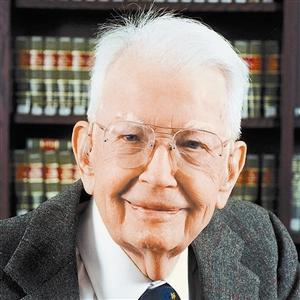
Coase’s theory of the firm tells us that companies exist because of transaction costs in the economy. Transaction costs are costs between two economic entities. Let’s say you’re going to buy a house. The amount that you pay as the buyer and the amount the seller will receive are not going to be the same. The difference between these two amounts is the transaction cost.

Transaction costs in the house buying example are fees for inspections, title insurance, real estate agent commissions, and so forth. As transaction costs increase, especially in frequency, companies will eventually bring these transaction costs inside of their firm. At some point, it’s more efficient to do those tasks internally.

Internalizing these transaction costs increases both the number of employees and the scope of tasks being performed at a company. Both of those things in turn increase the management burden on the company. This increased management burden increases the operating expense of the company.

The company decides how to balance the external costs from transaction costs and the internal costs from diminishing returns to management of increasing the number of tasks done internally. This is a classic economic tradeoff. Different companies decide differently how best to do this, and even the same company will decide differently at different points of its history.

When we observe a very big company, we know that this company has decided to internalize a great many of these external transaction costs. In any given transaction where these internalized transaction cost avoiding tasks are relevant, this very big company will be able to outcompete a much smaller competitor who lacks these internal capabilities and faces those external transaction costs.

We also know that this very big company is purpose-built through these decisions to perform well in an economic environment where there are significant transaction costs. Otherwise this very big company wouldn’t have taken on all those very big internal management costs. So, being a very big company is a strategic choice that most makes the sense when a company is facing an economic environment with significant transaction costs.

Migration lessens social cohesion

Migration lessens social cohesion, which increases transaction costs. Think about it.

Imagine that you’re in the market for a used car. Your mechanic neighbor is selling his wife’s car that he has meticulously maintained its entire life. You’ve known him and his family for years. You go to him for advice about cars. A used car dealer across town is also selling the exact same model of car with the same mileage and apparent condition for the exact same price.

Of course you would buy your mechanic neighbor’s car instead of the one at the used car dealer. You know exactly what you’re getting with your neighbor’s car. You don’t really know what you’d be getting from the used car dealer. That’s why it’s wise advise to hire a mechanic you trust to inspect used cars before you buy them. And that is a transaction cost. Both cars could be identical in every way, but you incur an inspection transaction cost from the used car dealer that you do not from your neighbor.

Economists refer to that difference in knowledge as information asymmetry. The buyer in this example doesn’t know as much about the used car as the seller does. So the buyer pays to have an inspection performed.

Back when most people lived their entire life in one place and when everybody knew all about everybody else, there weren’t nearly the transaction costs we increasingly face today. In American economic history this transition is usually referred to as urbanization. People migrated from rural farms to urban cities. When they did so, that old social cohesion was lost. Information asymmetry became the norm instead of the exception.

Information asymmetry is one of the causes for transaction costs in an economy. Since migration increases the prevalence of information asymmetries, mass migration increases transaction costs in an economy. Please note that this does not imply that migration is therefore always a bad thing. It undeniably has a cost, but there can be benefits to migration that would offset this cost.

Incentives Matter

Mass migration increases transaction costs. Very big companies are strategically and intentionally positioned to compete best in an economic environment with significant transaction costs. Therefore, all things equal, very big companies are incentivized to favor mass migration because it supports the economic environment in which they are strategically positioned to succeed.

Does this mean that every CEO, board member and shareholder of very big corporations supports mass migration? Of course not. It simply means that there is an economic incentive in place for them to support it.


0 Comments

No comments yet. Be the first to comment

Leave a Comment

Old Fashioned Service

I Tailor My Services To Align With Your Needs

Over the years, I have happily and confidentially advised a wide range of clients from a plumber near Pittsburgh to a robotics startup to a multi-state pediatrics practice. I am always your primary point of contact and hold myself accountable for your success.

The initial consultation is always free. My billing goal is to always provide clients with a high return on investment when working with me irrespective of their budget.

I am not a salesman. I will only take on a client when I can provide genuine value for them. Reach out if you need expert advice, assistance or have a question.

Dr. Matt Carter

Hi there! I'm Matt. I'm a Christian, husband and father of four. I'm a graduate of Calvin, Harvard, Cardiff and Johns Hopkins Universities. I have a PhD in Economics, an MBA in Finance and an MS in Data Analytics. I'm a numbers guy who can communicate well!

I began this service to work directly with the small and mid-sized business owners who grow our great country's economy. Since 1999, I've worked with owners across industries from high tech IT and robotics to small farmers and artists. I've also helped and advised nonprofits from churches to civic organizations.

I also served as a Finance Staff Officer and eventually as the National Division Chief for Measurement Research within the US Coast Guard. The research and methods I created there continue to guide strategic decisions to this day.

I enjoy being active outdoors, especially in wild lands. Hiking, biking and fly fishing are some of my favorite pastimes.

I also love dogs! I'm an AKC obedience evaluator, and I train service and therapy dogs.

Learn About Strategy, Finance and Accounting

Operating Expenses Disguised as Inventory

Companies need to keep some amount of inventory. When I go to a home repair supplier, I expect them to have the copper pipe I need in stock. When I go to my local bakery, I expect them to have the macarons I crave in stock. When I go to my local grocer, I expect […]

business finance learn

Big companies are incentivized to increase product specialization and complexity. Why?

Our culture values specialization. Having specialized skills often leads to outsized material benefits. It also often results in praise and social status. Consider the social recognition that would be given to a medical doctor who is a primary care family medicine doctor compared to that given to an orthopedic surgeon. They are both highly educated, […]

British Economist Ronald Coase

Transaction Costs in the American Economy from 1870 to 1970

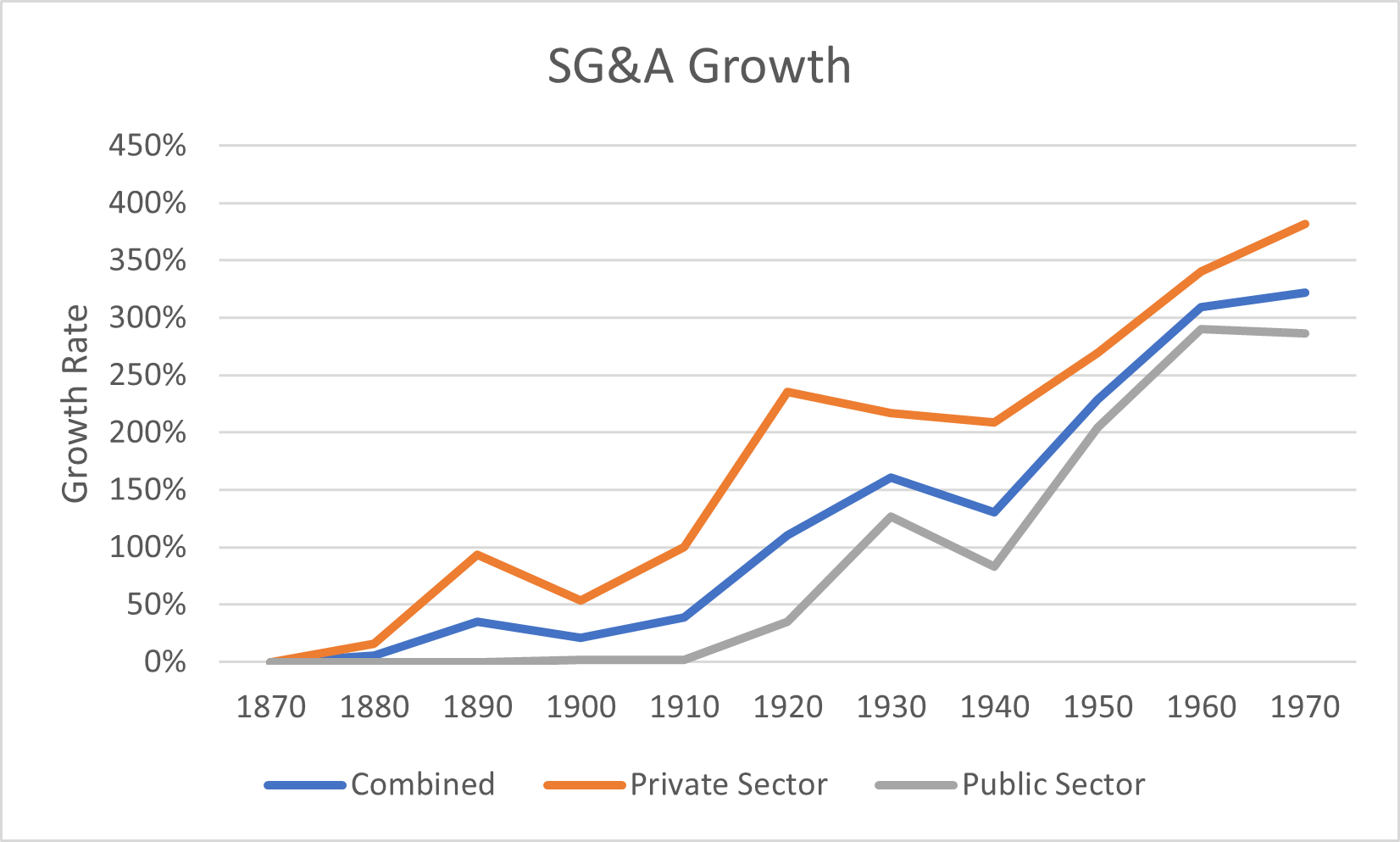
What Are Transaction Costs? Transaction costs are often overlooked in economics and textbook finance. In real life economics, however, they play a very significant role. In corporate finance, you can see many of a company’s transaction costs located in the selling and administrative categories within the Selling, General and Administrative (SG&A) section of their Income […]

Nobel Prize Winning Economist Ronald Coase

Coase’s Theory of the Firm

During the Great Depression, British economist Ronald Coase wrote a famous essay on the nature of the firm or company. As with America at the time, many free-market economies were also enduring a severe and difficult economic depression. The Soviet Union, however, was growing to become a significant industrial economy. This led to a debate […]

business economist cfo learn training

Transaction Costs and SG&A Expenses

Selling, General or Administrative Expenses One way to see how economic transaction costs are internalized within a company is in the SG&A Expense lines of a company’s income statement. All of the selling and administrative expenses are internalized transaction costs, and so is the insurance expense within the general expenses category. This is not the […]

Balance Sheet

What Is the Balance Sheet? The Balance Sheet is one of the primary financial statements used in accounting. The Balance Sheet shows a snapshot of a business’s financial position at a point in time. There are two sections: Assets and Liabilities & Equity. Not only does the Balance Sheet show individual and composite account balances, […]

Statement of Comprehensive Income

What Is the Statement of Comprehensive Income? The Statement of Comprehensive Income is a financial statement for items that are not included within Net Income from the Income Statement but nevertheless do affect the equity section of the Balance Sheet. The Statement of Comprehensive Income shows total comprehensive income. The Statement of Comprehensive Income includes […]