Every small business has a limiting factor. It could be leads, cash flow, capacity, almost anything.
The Small Business Doctor diagnoses and develops a treatment plan for your bottleneck.
From business plan analysis to routine small business checkups to strategy sessions,
the Small Business Doctor provides the full-suite of strategic fractional CFO services.
The way in which we account for business transactions is based upon the accounting principles known as Generally Accepted Accounting Principles or GAAP. US GAAP is the name of the accounting standard, and IFRS is a different standard used around the world. These business transactions are recorded within the accounting books, and are subsequently summarized by the financial statements.
I. Accounting Principles
There are seven Generally Accepted Accounting Principles. These principles form not only the policies for accounting but also serve as guidelines for accounting professionals as they do their work.
Accrual Principle
Under the accrual principle, we record expenses during the period in which the benefit received from those expenses occurs. It doesn’t matter when the cash was paid for those expenses. Similarly, we recognize income during the period in which the product or service was received by the customer not whenever we received payment for that product or service.
The rationale behind the accrual principle is that we want accounting to track the economic basis of a company’s transactions. If a small plumbing contractor pays insurance for his work van at the start of the year in January and it covers him through June, we would want to apportion that insurance expense to each of those six months and not assign this expense solely to January. It’s paid for in January, but the benefit of that expense extends through all six of those months.
Matching Principle
The matching principle is that revenues should be matched with the expenses that helped to generate them. The matching principle builds upon the accrual principle.
Monetary Principle
The monetary principle is that only events that can be recorded in a monetary value should be recorded in the financial books and presented in the financial statements. This does not mean that non-quantitative facts, such as having a good reputation, are unimportant to a business. It simply means that accounting is concerned with measuring monetary values.
This is important, because companies, especially tech startups, will sometimes try to present to potential investors non-monetary information like user engagement as though that were at least as important as cash flows. While internal metrics like user engagement are indeed important, they do not rise to the level that financial statement facts present.
Periodicity Principle
The periodicity principle simply states that we divide up a company’s operating cycle into periods like months, quarters, or years for reporting purposes. This helps the users of financial statements better make comparisons between companies.
Consistency Principle
The consistency principle states that accounting policies and principles should be consistently applied from one period to the next. An implication of this principle is that once a company adopts a policy or method, that policy or method should continue to be used going forward unless there is a valid reason to change it.
The consistency principle helps the users of financial statements better make comparisons of a company’s performance over time.
Conservatism Principle
Otherwise known as the Prudence Principle, the conservatism principle emphasizes caution while practicing accounting. All estimated losses should be recorded before those losses actually occur, while estimated gains should never be recorded before they actually occur.
The goal of the conservatism principle is to ensure that financial statements do not overstate assets or income. It is a check and balance against innate desire of the managers and owners of a company to make the company appear better than it actually is.
Going Concern Principle
The going concern principle is the assumption that a company will continue to operate indefinitely. The implication is that its assets are not intended to be liquidated in fire sale anytime soon.
It is from the going concern principle that accounting practices like the depreciation of assets over their useful lives are derived. It is part of the auditor’s task to assess the validity of the going concern assumption.
II. Accounting Standards
Accounting standards are the rule books set by regulatory agencies to standardize the way that financial transactions are recorded and presented. There are two main accounting standards.
US GAAP
US GAAP is the accounting standard primarily used here in America. There’s a massive amount of individual guidelines. US GAAP is overseen by the Financial Accounting Standards Board (FASB).
IFRS
International Financial Reporting Standards (IFRS) is a competing accounting standard. IFRS is overseen by the International Accounting Standards Board (IASB). IFRS is a more principles-based accounting standard that does not have as many individual guidelines as US GAAP.
III. Accounting Books
A company’s accounting books are where financial events are recorded. These books were once originally books, but are now almost always records inside of a database.
Journals
Journals are the books of original entry. Journals are where financial transactions are recorded in chronological order.
This is an example journal entry. This journal entry says that on August 3, 2015 $250 of inventory was purchased for cash.
August 3, 2015
Inventory
$250
Cash
$250
Ledgers
Ledgers summarize those transactions and categorize them by individual account. Ledgers are the books of final entry.
The ledger would, for example, sum all of the journal entries like the one above that affected the Cash Account. It would provide you with the total balance of the Cash Account.
Trial Balance
Trial Balance is a statement that lists all of the ledger accounts and their balances at some specific point in time, usually when the bookkeeper is in the process known as “closing the books.” The Trial Balance statement is used to ensure that total debits are equal to total credits, which ensures that the accounting entries are in balance.
IV. Financial Statements
The financial statements are formal presentations of a company’s financial activities and position. These documents are essential for decision-making by the users of financial statements.
Balance Sheet
The Balance Sheet presents a snapshot at a specific point in time of a company’s assets, liabilities and equity. The Balance Sheet is sometimes referred to as the Statement of Financial Position. Assets will equal the sum of liabilities and equity.
A balance sheet looks like this:
Balance Sheet
As of Dec 31, XXXX
Assets
Current Assets
Cash
$XXX
Accounts Receivable
$XXX
Inventory
$XXX
Non-Current Assets
PP&E
$XXX
Investment
$XXX
Goodwill
$XXX
Liabilities
Current Liabilities
Accounts Payable
$XXX
Accrued Liabilities
$XXX
Non-Current Liabilities
Bonds Payable
$XXX
Equity
Common Stock
$XXX
Additional Paid-in-Capital
$XXX
Retained Earnings
$XXX
Income Statement
The Income Statement shows a company’s revenues, expenses, and resulting profit or loss over a specific period of time. The Income Statement is sometimes referred to as the Profit and Loss Statement.
An Income Statement looks like this:
Income Statement
As of Dec 31, XXXX
Sales
XXX
Less: Cost of Sales
(XXX)
Gross Profit
XXX
Less: Selling, General & Administrative Expenses
(XXX)
Operating Profit
XXX
Less: Interest
(XXX)
Less: Taxes
(XXX)
Net Income
XXX
Cash Flow Statement
The Cash Flow Statement shows how the changes presented in the Balance Sheet and Income Statement affect cash and cash equivalents. The Cash Flow Statement is sometimes referred to as the Statement of Cash Flows.
A Cash Flow Statement looks like this:
Cash Flow Statement
For Year Ended Dec 31, XXXX
Cash Flow From Operations
Net earnings
$200
Additions to Cash
Depreciation
$70
Subtractions to Cash
Increase in Inventory
($50)
Net Cash From Operations
$220
Cash Flow From Investing
Equipment
($100)
Cash Flow From Financing
Notes Payable
$30
Cash Flow for FY Ended Dec 31, 2025
$150
Statement of Comprehensive Income
The Statement of Comprehensive Income includes all changes to equity during a specific period except for those derived from investments by owners or distributions to owners. The Statement of Comprehensive Income combines the Income Statement with Other Comprehensive Income items.
Statement of Changes in Equity
The Statement of Changes in Equity shows all changes to the Equity section of the Balance Sheet during a specific period. The Statement of Changes in Equity includes all changes from Net Income, Other Comprehensive Income, and transactions with owners.
Notes to Accounts
The Notes to Accounts include additional information to help interpret the financial statements. This is where you can find explanations of a company’s accounting policies, significant estimates, and other disclosures like that.
Over the years, I have happily and confidentially advised a wide range of clients from a plumber near Pittsburgh to a robotics startup to a multi-state pediatrics practice. I am always your primary point of contact and hold myself accountable for your success.
The initial consultation is always free. My billing goal is to always provide clients with a high return on investment when working with me irrespective of their budget.
I am not a salesman. I will only take on a client when I can provide genuine value for them. Reach out if you need expert advice, assistance or have a question.
Hi there! I'm Matt. I'm a Christian, husband and father of four. I'm a graduate of Calvin, Harvard, Cardiff and Johns Hopkins Universities. I have a PhD in Economics, an MBA in Finance and an MS in Data Analytics. I'm a numbers guy who can communicate well!
I began this service to work directly with the small and mid-sized business owners who grow our great country's economy. Since 1999, I've worked with owners across industries from high tech IT and robotics to small farmers and artists. I've also helped and advised nonprofits from churches to civic organizations.
I also served as a Finance Staff Officer and eventually as the National Division Chief for Measurement Research within the US Coast Guard. The research and methods I created there continue to guide strategic decisions to this day.
I enjoy being active outdoors, especially in wild lands. Hiking, biking and fly fishing are some of my favorite pastimes.
I also love dogs! I'm an AKC obedience evaluator, and I train service and therapy dogs.
Companies need to keep some amount of inventory. When I go to a home repair supplier, I expect them to have the copper pipe I need in stock. When I go to my local bakery, I expect them to have the macarons I crave in stock. When I go to my local grocer, I expect […]
Our culture values specialization. Having specialized skills often leads to outsized material benefits. It also often results in praise and social status. Consider the social recognition that would be given to a medical doctor who is a primary care family medicine doctor compared to that given to an orthopedic surgeon. They are both highly educated, […]
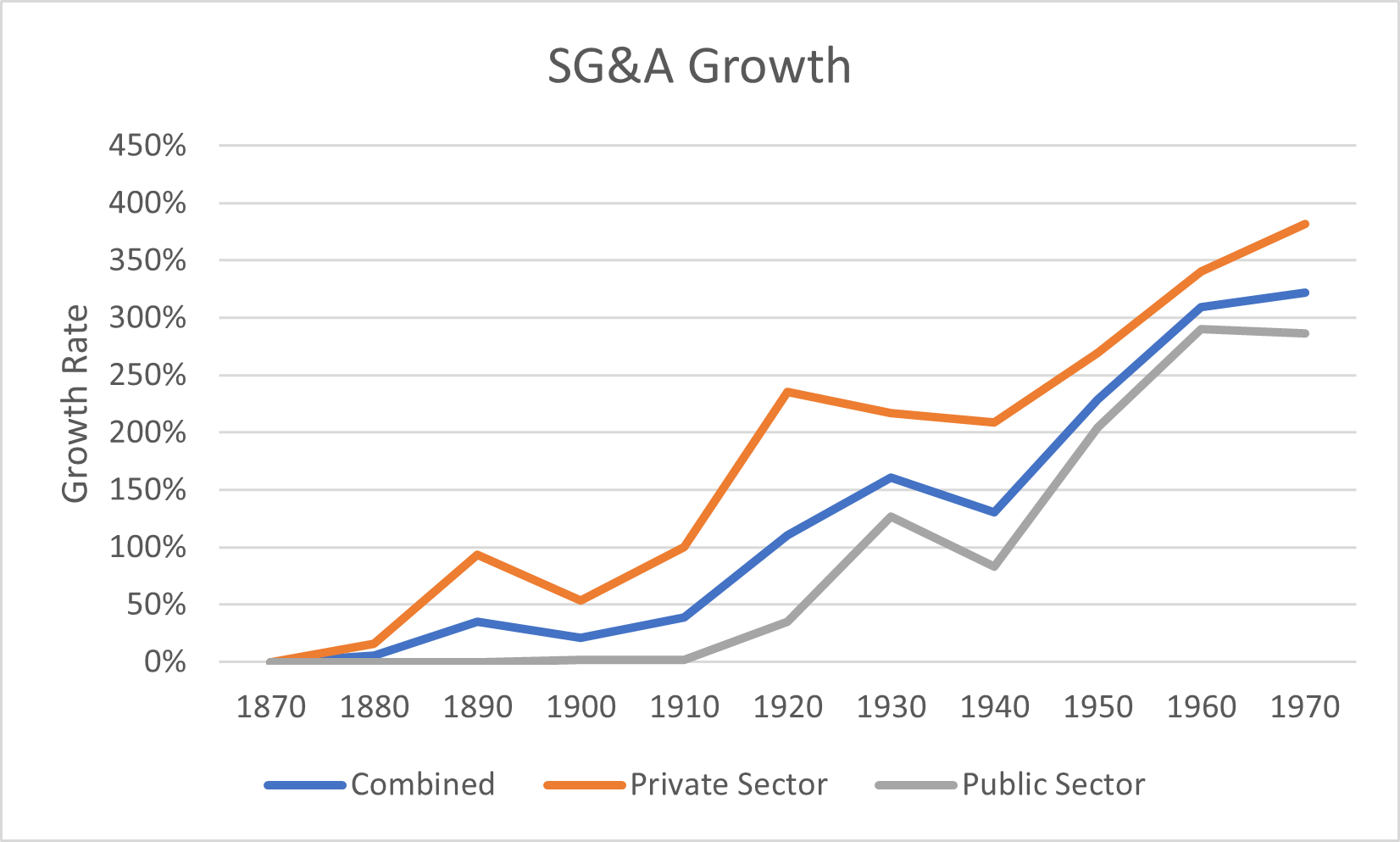
What Are Transaction Costs? Transaction costs are often overlooked in economics and textbook finance. In real life economics, however, they play a very significant role. In corporate finance, you can see many of a company’s transaction costs located in the selling and administrative categories within the Selling, General and Administrative (SG&A) section of their Income […]
During the Great Depression, British economist Ronald Coase wrote a famous essay on the nature of the firm or company. As with America at the time, many free-market economies were also enduring a severe and difficult economic depression. The Soviet Union, however, was growing to become a significant industrial economy. This led to a debate […]
Selling, General or Administrative Expenses One way to see how economic transaction costs are internalized within a company is in the SG&A Expense lines of a company’s income statement. All of the selling and administrative expenses are internalized transaction costs, and so is the insurance expense within the general expenses category. This is not the […]
Spams and scams have killed public polling. The person who would risk blowing up their phone or their bank account for the promise of a $20 gift card is not at all representative of the population at large.
Earnings per share (EPS) is a well-known financial metric that measures Net Income relative to the number of outstanding shares a company has. EPS is often used to compare one company to another. Basic Earnings Per Share EPS can be either basic or diluted. Basic EPS shows the portion of Net Income attributed to each […]







0 Comments
No comments yet. Be the first to comment