Small Business Doctor Logo

Small Business Doctor

Delivering honest value through deep expertise to small business owners like you.

Decorated Coast Guard Financial Advisor. Economics PhD. Finance MBA. Harvard & Johns Hopkins Grad.

Bookkeeping  

Small Business Doctor is an Intuit Quickbooks ProAdvisor certified firm with reasonable rates. Every bookkeeper is a certified bookkeeper. We can handle payroll if requested and can clean up your books if needed.

Learn more about Small Business Doctor's bookkeeping and accounting

Advisory  

Every small business has a limiting factor. It could be leads, cash flow, capacity, almost anything. The Small Business Doctor diagnoses and develops a treatment plan for your bottleneck.

From business plan analysis to routine small business checkups to strategy sessions, the Small Business Doctor provides the full-suite of strategic fractional CFO services.

Learn  

Learn all about accounting, finance, business strategy, economics, and financial math from the basics to the advanced. I've taught and tutored these subjects for years, helping everyone from teens to postdocs, CPAs and MDs.

I want us all to grow. It's never too late to learn something new.

Ancient Israelite Arithmetic

Ancient Israelites did not do arithmetic like we do arithmetic in America today. Multiplication like we do it today did not arrive in Europe from India where it originated until the 13th century with Fibonacci.

So, how would an ancient Israelite do arithmetic like multiplication? They almost certainly did multiplication like the ancient Egyptians did it. This method is also known as the peasant method, and is still done by some people today who lack formal math education.

Multiplication in this method is based on successive additions and doubling. It also uses powers of 2. Powers of 2 are 1, 2, 4, 8, 16, 32, 64, and so on.

To demonstrate this, consider 25 X 100. For many of us, we could look at this and say the answer is 2,500. The ancients could not do this. Instead, they would do this.

Ancient Multiplication

  1. Decompose one of the two numbers. To decompose 25, we ask:
    • What is the largest power of 2 that is less than or equal to 25?
      • The answer is 16.
    • Subtract this power of 2 from 25.
      • 25 – 16 = 9.
    • What is the largest power of 2 that is less than or equal to 9?
      • The answer is 8.
    • Subtract this power of 2 from 9.
      • 9 – 8 = 1.
    • What is the largest power of 2 that is less than or equal to 1?
      • The answer is 1.
    • Subtract this power of 2 from 1.
      • 1 – 1 = 0.
    • 25 is the sum of 16 + 8 + 1.
  2. Construct a table of powers of 2 times the other number (100) from 1 through the largest power of 2 from step 1, which is 16. They did this by doubling.
    • Begin with 1.
      • Begin with the 100.
    • 2 is the next power of 2.
      • Double 100 to get 200.
    • 4 is the next power of 2.
      • Double 200 to get 400.
    • 8 is the next power of 2.
      • Double 400 to get 800.
    • 16 is the next power of 2.
      • Double 800 to get 1,600.
  3. Add only those rows from step 2 that contain the results from step 1.
    • Use only 1, 8, and 16.
    • These are 100, 800 and 1,600
    • 100 + 800 + 1,600 = 2,500

Likely Implications from Multiplying Like This

As you can see, this is exceptionally tedious, and there’s no realistic way to reliably calculate this in your head. As a result, everyone would be much more likely to think and remember counts in terms of X sets of Y rather than in terms of the final product Z.

This would be like saying “I have 8 dozen sheep,” instead of saying “I have 96 sheep.” To go from 8 X 12 = 96, which in words is 8 of the dozen unit size is equal to 96, would take all of those intermediate steps above. So, ancients would have been much more likely to say “8 dozen” instead of “96.”

This way of counting would lead to having certain standardized unit sizes that could be readily identified, because you’d be counting in terms of those sets. In America, this would be akin to a dozen. From a dozen we could have a half dozen, which is 6, or even a gross, which is a dozen dozens.

Also note that even though 96 is a compact and efficient way of conveying the number of sheep I have, it is also a summary of information. If a honey farm received 1 order of 96 jars of honey, that is very different than receiving 8 orders of 12 jars of honey, which is also different than 96 orders of 1 jar of honey. If I only receive 1 order, then I know I have 1 very large buyer, which is risky for a business. If I have 8 orders of 12 jars each, then I know I likely have resellers like stores buying my honey. If I have 96 single jar orders, then I know I likely have individual consumers buying my honey. Potentially important information like this is lost when I only use “96” instead of “8 dozen.”

Counting instead of multiplying

Instead of using any arithmetic, why would they not simply count their 96 sheep? If we primarily think about counting in terms of a relatively small number of stationary objects, this would make sense. Someone could go through an encampment and count the number of tents. But sheep and people tend to move around while you’re trying to count them. So, there are logistical constraints to counting.

Another difficulty with counting a large number of objects outside in the real world is that as the numbers get larger and the time spent counting increases, it becomes increasingly likely that you would miscount or lose your place in the counting. So, the likelihood of errors increases alongside the duration of counting.

It takes only a minute to count to a hundred, but it took Jeremy Harper about 3 months of 16-hour days to count to a million. His overall average was only counting about 700 times in an hour. There are diminishing returns to counting.

For example, if we use his documented average, it would take a little more than 571.4 person hours to count to the 400,000 used in many translations of Judges 20:2. That’s nearly 24 days of nonstop 24-hours a day counting. Even if they split this task up among hundreds of counters, why would they do this massive counting effort on the eve of battle?

Fourthly, it is actually much more efficient when counting a large number of items to first divide them up into smaller sets and count those. This is often referred to by math educators as counting collections.


0 Comments

No comments yet. Be the first to comment

Leave a Comment

Old Fashioned Service

I Tailor My Services To Align With Your Needs

Over the years, I have happily and confidentially advised a wide range of clients from a plumber near Pittsburgh to a robotics startup to a multi-state pediatrics practice. I am always your primary point of contact and hold myself accountable for your success.

The initial consultation is always free. My billing goal is to always provide clients with a high return on investment when working with me irrespective of their budget.

I am not a salesman. I will only take on a client when I can provide genuine value for them. Reach out if you need expert advice, assistance or have a question.

Dr. Matt Carter

Hi there! I'm Matt. I'm a Christian, husband and father of four. I'm a graduate of Calvin, Harvard, Cardiff and Johns Hopkins Universities. I have a PhD in Economics, an MBA in Finance and an MS in Data Analytics. I'm a numbers guy who can communicate well!

I began this service to work directly with the small and mid-sized business owners who grow our great country's economy. Since 1999, I've worked with owners across industries from high tech IT and robotics to small farmers and artists. I've also helped and advised nonprofits from churches to civic organizations.

I also served as a Finance Staff Officer and eventually as the National Division Chief for Measurement Research within the US Coast Guard. The research and methods I created there continue to guide strategic decisions to this day.

I enjoy being active outdoors, especially in wild lands. Hiking, biking and fly fishing are some of my favorite pastimes.

I also love dogs! I'm an AKC obedience evaluator, and I train service and therapy dogs.

Learn About Strategy, Finance and Accounting

Operating Expenses Disguised as Inventory

Companies need to keep some amount of inventory. When I go to a home repair supplier, I expect them to have the copper pipe I need in stock. When I go to my local bakery, I expect them to have the macarons I crave in stock. When I go to my local grocer, I expect […]

business finance learn

Big companies are incentivized to increase product specialization and complexity. Why?

Our culture values specialization. Having specialized skills often leads to outsized material benefits. It also often results in praise and social status. Consider the social recognition that would be given to a medical doctor who is a primary care family medicine doctor compared to that given to an orthopedic surgeon. They are both highly educated, […]

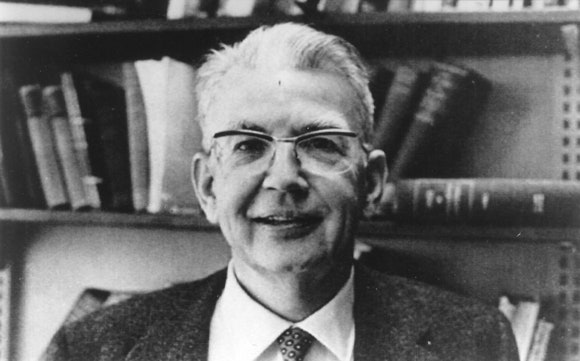
British Economist Ronald Coase

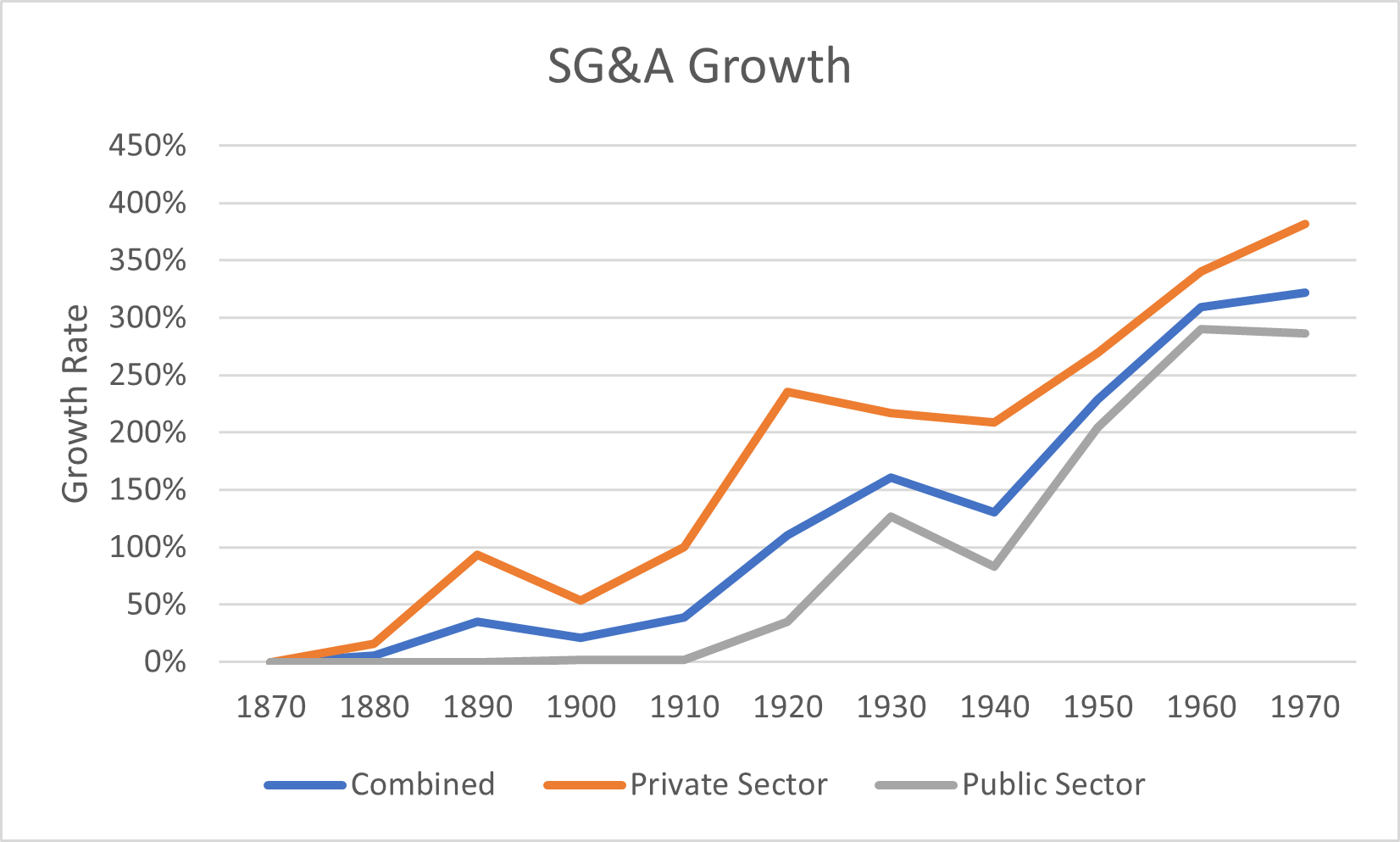
Transaction Costs in the American Economy from 1870 to 1970

What Are Transaction Costs? Transaction costs are often overlooked in economics and textbook finance. In real life economics, however, they play a very significant role. In corporate finance, you can see many of a company’s transaction costs located in the selling and administrative categories within the Selling, General and Administrative (SG&A) section of their Income […]

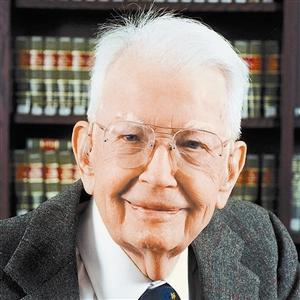
Nobel Prize Winning Economist Ronald Coase

Coase’s Theory of the Firm

During the Great Depression, British economist Ronald Coase wrote a famous essay on the nature of the firm or company. As with America at the time, many free-market economies were also enduring a severe and difficult economic depression. The Soviet Union, however, was growing to become a significant industrial economy. This led to a debate […]

business economist cfo learn training

Transaction Costs and SG&A Expenses

Selling, General or Administrative Expenses One way to see how economic transaction costs are internalized within a company is in the SG&A Expense lines of a company’s income statement. All of the selling and administrative expenses are internalized transaction costs, and so is the insurance expense within the general expenses category. This is not the […]

Balance Sheet

What Is the Balance Sheet? The Balance Sheet is one of the primary financial statements used in accounting. The Balance Sheet shows a snapshot of a business’s financial position at a point in time. There are two sections: Assets and Liabilities & Equity. Not only does the Balance Sheet show individual and composite account balances, […]

Statement of Comprehensive Income

What Is the Statement of Comprehensive Income? The Statement of Comprehensive Income is a financial statement for items that are not included within Net Income from the Income Statement but nevertheless do affect the equity section of the Balance Sheet. The Statement of Comprehensive Income shows total comprehensive income. The Statement of Comprehensive Income includes […]